A few thoughts that these writings have triggered:
I was reminded of one of the few jokes I ever manage to remember. A chemist, an engineer, and an economist are stuck on a deserted island with a single can of food. In the searing heat, they begin to argue over the best way to open the can. The chemist proposes leaving the can in the sun until the contents hit a boiling point and the can explodes. The engineer suggests throwing the can at the lone rock at a certain angle to pop the can open. The economist says, “Assume a can opener…”
This joke is usually good for a few laughs. But of course, it is only funny if we think that the economist’s assumption is his belief. If he believes he has a can opener, he is clearly delusional – and it makes us chuckle thinking of that time someone told us something with great authority and then we realized the emperor had no clothes.
But what if his assumption is a working hypothesis, rather than a belief? Does it help the others realize that a can opener would conserve much more food in the can than exploding it through their methods? Does it make them look around and see if there is anything they could jimmy together to make a can opener?
Beliefs are important. They have an air of the sacred about them. “I believe in God like I believe in the sun: not only because I see it, but because by it I see everything else.” (C.S. Lewis). They powerfully influence many of our daily behaviors. And we are willing to defend them strongly, and in some cases, with the ultimate price.
But we are privileging assumptions into stridently held beliefs in all sorts of areas: who makes the best teachers, what makes food healthful, what different types of people can accomplish, whether substance abuse is someone’s fault, whether quarterly earnings reports ensure executives act in the best interest of shareholders, and so on. “Everyone knows x, y, or z is true, or will happen, or could not possibly happen.” With each bounce off the echo chamber’s wall, the certainty of the assumption is amplified.
We get lazy: We do not know the history behind the assumption to know if conditions have changed. We too quickly dismiss as ignorant the few who do not believe, and do not demand and then examine their fact-base. We fail to watch for and fix unintended consequences from oversimplification. We forget that there can be many more ways to reach an objective than one methodology – and in fact many circumstances require different solutions. And we do not push beyond the assumption by continuing to imagine “what if?”.
Let’s think about treating most of our assumptions more like working hypotheses. “Working”, meaning that we act on the hypotheses; we do not wait for indisputable proof. “Hypotheses”, meaning that we continue to examine the fact base around the idea or solution. Working hypotheses allow us to funnel resources to societal challenges with the hope and, over time, increasing evidence that a solution works. At the same time, we continue to look for counter-proofs, elements of truth in naysayers’ arguments, or changes in circumstances in our world that help us improve the solution.
This is enlivening and creative way to engage in society too – it has personally been an enjoyable and mind-expanding journey of late. Below are some podcasts and readings that I have found particularly thought provoking in challenging deeply held assumptions. If you are finding yourself trying to adopt more of a “growth mindset” or you just failed a “Do you live in a bubble?” test, I recommend these articles and podcasts. Please recommend others back.
How to Become Batman: Does it seem a safe assumption to say that the blind cannot “see”? Invisibilia’s podcast will make you think again. This lively listen demonstrates how expectations can radically define what others accomplish. It is a great introduction to the Invisibilia series, which has at its heart upending assumptions about how we perceive how the world works.

The Teacher Wars: A History of America’s Most Embattled Profession: Dana Goldstein’s deeply researched examination of public schools in America makes its biggest contribution in sharing the history of public education debates. You quickly realize that every issue debated today about teaching has existed since the start of our public school model. Understanding that history helps to blur what were seemingly bright lines in the debates. For example, tenure, which certainly has its major drawbacks as currently administered in many school districts, originated as a way to ensure teachers would not be subject to politically motivated firings. Suddenly current events in Turkey – or the specter of politically-inspired curbs on free speech – make the underlying issue more salient, even if the specific fix is inadequate.
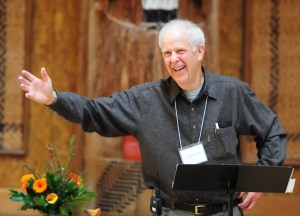
The Inner Life of Rebellion: In this On Being podcast, “Quaker wise man” Parker Palmer and young journalist Courtney Martin explore with Krista Tippett the inner conditions that allow for individuals to make sustainable societal change over time. One is the ability to hold paradoxes – to seek but not force reconciliation, even in our own minds. Another is that disruption is really about creation, not about destruction. Both of these resonate with the idea that working hypotheses are far more powerful than ossified beliefs.

“Cynicism versus Skepticism“: Dan Rather has been a thoughtful observer and call to conscience for many this past year. He has long held the credo that journalists should be skeptics, not cynics. Skeptics question, cynics dismiss. In his Facebook post of November 4, 2016, he calls on us all to adopt the same credo.
 Love is an active verb